
It has been declared of touristic interest and has been held since the 1960s in Sant Joan the first Sunday of October. In the afternoon, bonfires are lit and the people from the village roast slices of bread with botifarrons (a typical Majorcan sausage), and eat to the beat of the music.
A day before the beginning of the Patron Saint festivities of Fornalutx in honor of the Virgin of september, the 7th, the village welcomes hundreds of young people participating in the correbou. In the first hours of the morning, an enormous bull comes out of his lair; a large wood drawer, and moves through the streets of the town with the horn tied to some strings guided by the many young people accompanying him on his journey. For some years, after the protests of environmental groups, a group of volunteers ensures that the bull does not suffer any kind of harassment or abuse.
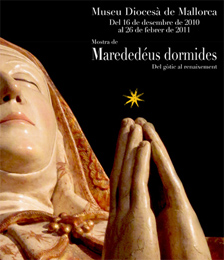
For years, Palma celebrates this festivity in a very special way. The churches of the city open so that the visitors can see pictures of resting virgens, a liturgical expression that has also become an artistic and popular manifestation. The Consell de Mallorca edits an agenda that includes the churches of Palma and the villages of Mallorca where you can visit the beds of the virgins that are asleep.
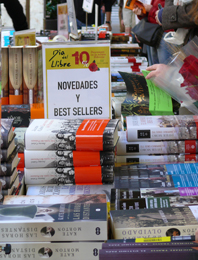
For many years now, Mallorca has borrowed from Cataluña, the way to celebrate Sant Jordi (Saint George): with a book and a rose. The main bookshops in Palma, have stalls in the streets and for every book that is purchased, a rose is given. This way, for a day, not only the Balearic capital but the majority of municipalities of the island, become a cultural paradise that promotes and encourages reading among its citizens.
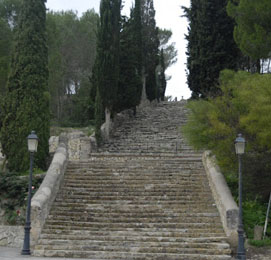
It is one of the most beloved celebrations within the calendar of Saint’s days in San Joan. It is also known as Quart Diumenge, because it is held the fourth Sunday of Lent and its tradition dates back to the 16th century. It consists of a procession on foot to the church of Mare de Déu de la Consolació, at the top of the hill.
According to legend, this is the place where a muslin Shepherd found an image of the virgin, which gave origin to the adoration. The coquetes and the casques, pastries based on flour and water, are typical of this celebration.
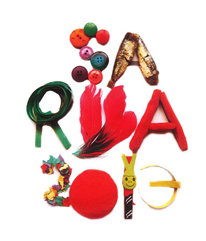
In Mallorca, the Carnival is also known as the Darrers dies (Last days), in reference to the arrival of the Christian Lent and with it, the prohibition to eat meat. It begins with the dijous gras, and extends throughout the weekend with concerts, dances and a disguised group parade. The most crowded ones are in Sa Rua, Sa Rueta and in Palma. (The one in Palma is a child’s one). They end with the traditional burial of the sardine.
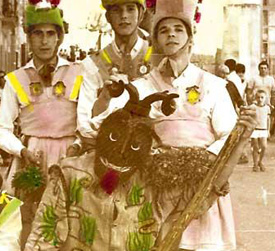
The most popular part of the festivity of Saint Bartholomew (Sant Bartolomeu) in Montuïri is the dance of the cossiers. Six male characters, dressed in white with skirts of overlapping colors and a strip of which hang colored ribbons, dance around a Lady who coordinates the choreographies of the group. These dances are related to ancient fertility festivals, although its origin is uncertain. The previous evening to Saint Bartholomew, the cossiers and the demon search for the lady to her house. After that, they dance in front of the houses of the authorities and, lastly, in the main square. The next day, the Cossiers dance one more time in the interior of the church, in the so-called Ball dels mocadors (Dance of the handkerchiefs).
It is the official holiday of the Autonomous region of the Balearic Islands and it commemorates the entry into force of the Statute of Autonomy on the first of March, 1983. The program includes numerous activities, such as craft samples, artisan products and traditional gastronomy of Mallorca and the regional houses. There is also a medieval market, spot activities or the open day of Consolat de Mar, headquarter of the Balearic government.
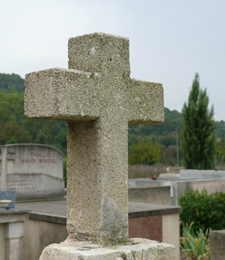
In Mallorca, it is still tradition that families remember their dead with a visit to the cemetery, where tombs are decorated with large amount of flowers. According to legend, each November 2 the King Jaume I goes out on horseback to the Cathedral, where his tomb is located, to ride as a spectrum on the island for a few hours and eventually return to his final resting place.
It is the Feast of Mallorca, which commemorates the oath by Jaume II of the Letter of frankness’s and privileges of the Kingdom of Mallorca. During more than a week, mainly in Palma, different activities are organized: a latina sailing race, a sling shot competition, racing trot competitions in the hippodrome Son Pardo etc. It celebrates an institutional act in which they give awards and prizes to mallorcan personalities that have stood out for their work in the world of art, culture, letters, or for their contribution to civil society.
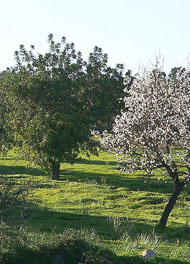
It has been held since 1989 in Lloret de Vistalegre, a Sunday of March, without determining. At mid-morning, people concentrate around the village square to go on foot to the commune, where throughout the day various activities related to nature are held, from drawing competitions and workshops to tree planting and cleaning of roads.
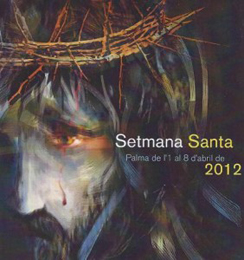
It is traditional in the villages of Mallorca the celebration of the famous procession del Encuentro, (a meeting, in the first hour of the morning). The ritual, with slight variations, is always the same: the image of the Virgin Mary comes to the passage of the figure of the risen Jesus following an established route. The overwhelming moment, is when they both meet to the tune of the peal of bells, firecrackers, and sometimes, pigeon loose. Later, the procession goes to the church where the trade of Glory is celebrated.