Among the modern artists who after the Second World War settled in the Balearic Islands to produce an extensive part of their work, Katja Meirowsky (Straussdorf, 1920 – Potsdam, 2012) has remained unjustly distant from the historiographical spotlight. Her work and her figure appear to us today under the sign of a certain anachronism, of strangeness and, at the same time, of a powerful aesthetic determination.
In 1952, Katja Meirowsky and her husband settled in Ibiza. Despite being part of the Ibiza 59 Group, in which she was the only woman in an eminently male environment, Meirowsky lives an almost ascetic life, without many social relationships and surrounded by a small group of friends. Karl and Katja Meirowsky developed a particular love for archeology on the island that led Karl Meirowsky to be the first foreign member of the then called Institute of Ibizan Studies.
Made from the work that the artist kept throughout her career, guarded by her friends Marianne and Reinhard Lippeck in Potsdam, the exhibition wants to question the reasons for the fascination that her work exerts today. .



Vista is the first solo exhibition of British artist Fiona Rae to be held in Spain. The exhibition brings together a selection of works created ...
Leer más
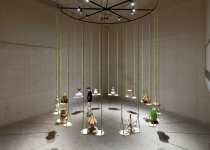
Utopía del Lodo y Sashimi de Bruma is an immersive installation by Grip Face that reflects on the global state of war today, with special ...
Leer más

The Casal Solleric presents the project The Red Room by the Mallorcan artist Bernardí Roig (Palma, 1965), an intervention conceived specifically for ...
Leer más

Miró's most experimental stage: found objects, “discarded” materials and the art of looking at everyday life ...
Leer más