With Hedda Gabler, released in January 1891, Henrik Ibsen gives another slap to the bourgeoisie of his time portraying a woman who refuses to be burdened by social conventions.
Years before he had created another of the great female characters in the history of theater, Nora, the protagonist of Dollhouse. Unlike her, Hedda is no revolutionary, but an anti- heroin and a clear example not to follow, although we are fascinated with her very strong and complex personality.
Hedda represents like no other character the female dissatisfaction. The end of the play has angered for years the most conservative audience as it symbolizes, in a sense, the victory of a woman who until the last minute stays true to her cruel code of personal requirement.
This production of the Teatre Principal is a version of José Martret, who is also responsible for the direction. With staging by Alberto Puraenvidia and interpreted by Caterina Alorda, Pedro Mas, Borja Tous, Laura Pons, Santi Pons and Irene Soler.

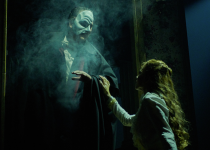


The legendary musical The Phantom of the Opera by Andrew Lloyd Webber arrives in our city as part of its major Spain tour 2025–2026. Inspired by ...
Leer más

If you are attracted to stories that mix memory, music and half-lit ...
Leer más

4 passes per night in Blanquerna + grand finale at the Leer más